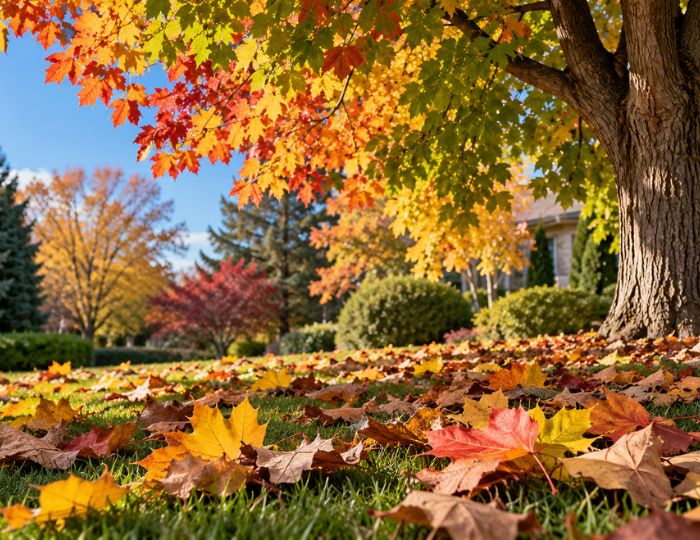
Fall naturally brings dramatic changes to trees. Green leaves turn yellow, orange, red, and brown before eventually falling to the ground.
But what happens when your tree starts changing earlier than expected?
Premature browning, unusual yellowing, curling leaves, thinning canopies, or early leaf drop can sometimes be more than normal seasonal behavior. These symptoms may indicate that a tree has been under stress during the growing season.
At Tree Green, we encourage homeowners to pay attention to how a tree changes, not simply whether leaves are falling. The pattern and timing can provide useful clues about what’s happening.
When Is Fall Leaf Drop Normal?
Deciduous trees naturally prepare for winter by shedding their leaves.
As daylight decreases and temperatures change, trees transition toward dormancy. Different species may change color and drop leaves at different times, so you shouldn’t expect every tree in your yard to follow the same schedule.
Weather can also influence exactly when those changes occur.
The concern is when a tree’s behavior seems significantly different from what you’ve observed previously or from similar trees nearby.
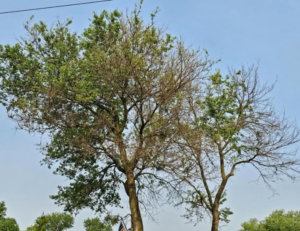
For example, one tree becoming thin or brown while neighboring trees remain relatively full may deserve a closer look.
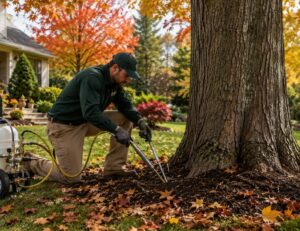
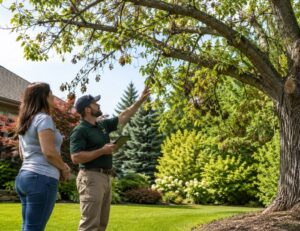
Tree Green provides professional tree diagnosis services to help identify what may be affecting a tree when symptoms aren’t easily explained.
Why Do Leaves Turn Brown Before Fall Really Begins?
Brown leaves don’t point to one single problem.
Environmental stress can affect foliage, particularly when trees have experienced difficult growing conditions.
Tree Green has previously discussed how heat and drought stress can appear in trees and how repeated environmental challenges can continue affecting tree health over time.
A stressed tree may show changes in its canopy before autumn progresses normally.
Look Beyond the Leaves
Leaves are highly visible, which makes them one of the first places homeowners notice trouble.
But the leaf itself may not be the underlying problem.
Conditions involving the roots, soil, insects, disease, or environmental stress can eventually become visible in the canopy.
That’s why diagnosing a tree solely from leaf color can be misleading.
Could Yellow Leaves Signal a Nutrient Problem?
Sometimes homeowners expect a deep green canopy but instead see leaves becoming unusually pale or yellow.
Tree Green has specific resources addressing yellowing in oak, river birch, and maple trees and has also explained chlorosis and why tree leaves can turn yellow.
Chlorosis can create a distinctive yellow appearance and shouldn’t automatically be dismissed as early fall color.
Timing matters.
So does the tree species and the pattern of discoloration.
If leaves have been yellowing well before normal autumn color begins, the tree may benefit from professional evaluation rather than waiting to see what happens next spring.
Can Drought Stress Cause Early Leaf Drop?
Water availability can have a major influence on tree health.
A tree experiencing prolonged environmental stress may respond differently than a well-supported tree entering a normal autumn season.
And one period of rain doesn’t necessarily reverse stress that developed over a much longer period.
Tree Green has previously discussed this issue in detail in our article about leaf delay and long-term tree stress.
We’ve also documented how years of drought can affect trees and shrubs.
Looking at the entire growing season—not just the weather this week—can provide important context when evaluating fall symptoms.
Could Roots or Soil Be Contributing to the Problem?
A healthy canopy depends heavily on conditions underground.
Roots need an appropriate soil environment to support the rest of the tree. When soil conditions become unfavorable, the visible symptoms may eventually appear much higher up.
Compacted soil is one example.
Tree Green has explained how soil compaction can negatively affect tree health.
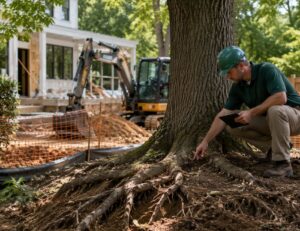
Construction activity can also disturb the root environment. If recent work has occurred near a tree, read more about how construction and root disturbance can affect long-term tree health.
This is why treating only what you see on the leaves may not address the actual source of the problem.
Are Insects or Disease Causing the Leaf Changes?
Potentially.
Trees and shrubs can be affected by numerous pests and diseases, and symptoms vary depending on the species and condition involved.
Tree Green provides both insect control services and fungus control services for problems affecting susceptible trees and shrubs.
Homeowners can also review our guide to common tree diseases for more information about disease-related concerns.
Avoid assuming that every spotted, discolored, or dropping leaf is caused by the same thing. Correct identification matters when deciding whether treatment is appropriate.
What Should You Do If Your Tree Looks Different This Fall?
Start by observing.
Look at the entire tree rather than collecting one leaf and trying to diagnose the problem from that alone.
Consider:
- When the symptoms began
- Whether the entire canopy is affected
- Whether symptoms are concentrated on particular branches
- Whether similar nearby trees look different
- Whether the tree experienced drought or heat stress
- Whether construction occurred near the roots
- Whether you’ve noticed insects or unusual growth
- Whether the tree has shown similar symptoms in previous years
Photos taken throughout the growing season can also be helpful for tracking changes.
If the symptoms are concerning or recurring, professional evaluation can help determine whether you’re seeing ordinary seasonal change or a tree-health issue.
Don’t Wait for Severe Decline Before Paying Attention
Trees can experience stress long before homeowners realize something is wrong.
By the time canopy thinning or major dieback becomes obvious, the underlying issue may have been developing for some time.
Tree Green’s article about why mature trees can suddenly appear to decline explains why apparent “sudden” problems may have deeper histories.
When a tree needs additional support, Tree Green also offers tree stress recovery services based on the tree’s condition and needs.
Let Tree Green Help You Understand What Your Tree Is Telling You
Fall leaves can be beautiful, but unusual leaf behavior can also give homeowners an opportunity to notice tree-health concerns before winter.
If one of your trees looks noticeably different this year, don’t assume every brown or dropping leaf is simply autumn arriving early.
Tree Green provides professional tree-health services throughout its service area. When you’re concerned about unusual leaf color, early leaf drop, thinning, or other symptoms, contact Tree Green to have the situation evaluated.
Key Takeaways
- Leaf color and leaf drop naturally change as deciduous trees prepare for winter.
- Unusually early browning, yellowing, thinning, or leaf drop may deserve additional attention.
- Drought and environmental stress can influence how a tree’s canopy looks in fall.
- Yellow leaves can sometimes indicate chlorosis rather than normal autumn color.
- Soil compaction and root disturbance may eventually create visible canopy symptoms.
- Insects and fungal diseases can also affect foliage.
- Look at the entire tree and its recent history rather than diagnosing a problem from one leaf.
- Professional tree diagnosis can help distinguish normal seasonal changes from potential tree-health concerns.