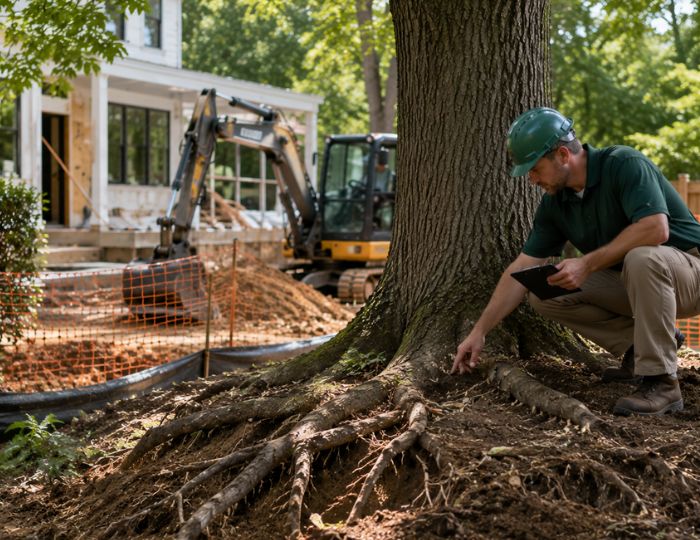
Home improvement projects can add value to your property, but they can also unintentionally harm one of its most valuable assets—your trees. Whether you’re installing a patio, building an addition, replacing a driveway, or upgrading your landscaping, construction activities often affect tree roots long before visible damage appears.
At Tree Green, we frequently evaluate mature trees that begin declining months or even years after nearby construction. Understanding how root disturbance impacts tree health can help homeowners protect their landscape before irreversible damage occurs.
Most of a Tree’s Roots Are Surprisingly Shallow
Many people assume tree roots grow deep underground. In reality, most absorbing roots are located within the top 12 to 24 inches of soil.
These roots are responsible for:
- Absorbing water
- Taking in nutrients
- Storing energy
- Anchoring the tree
- Supporting healthy growth
Because they’re so close to the surface, they’re especially vulnerable during construction projects.
Common Construction Activities That Damage Roots
Tree damage isn’t always caused by cutting roots directly.
Several common construction practices can negatively impact root systems, including:
- Excavation and trenching
- Driveway or sidewalk installation
- Heavy equipment traffic
- Soil grading
- Utility installation
- Material storage beneath the canopy
Even seemingly minor projects can disturb a significant portion of a tree’s root system.
Soil Compaction Can Be Just as Harmful
One of the most overlooked forms of construction damage is soil compaction.
When heavy equipment repeatedly drives over the root zone, the soil becomes compressed, making it difficult for roots to receive the oxygen and water they need.
Compacted soil can contribute to:
- Reduced root growth
- Poor nutrient uptake
- Slower recovery from drought
- Increased tree stress
- Long-term decline
Our Tree Stress Recovery services help trees recover from environmental and construction-related stress whenever possible.
Warning Signs May Take Years to Appear
Trees often don’t show immediate symptoms after root damage.
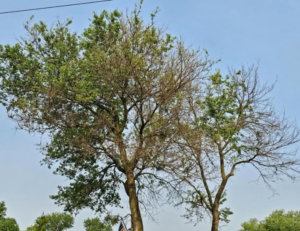
Instead, homeowners may notice gradual changes such as:
- Smaller leaves
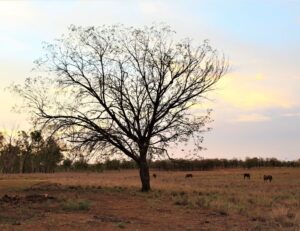
- Thin canopies
- Dead branches
- Early fall color
- Increased insect activity
- Reduced annual growth
Because these symptoms often appear long after construction ends, homeowners may not realize the two events are connected.
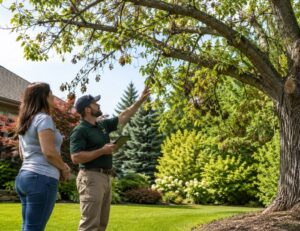
A professional Tree Diagnosis can identify whether root disturbance is contributing to a tree’s decline.
Protecting Trees Before Construction Begins
The best way to protect valuable trees is to plan ahead.
Helpful preventative measures include:
- Establishing tree protection zones
- Avoiding excavation near major roots
- Limiting heavy equipment beneath the canopy
- Preventing soil compaction
- Consulting an arborist before construction begins
Protecting roots before work starts is far easier than treating a declining tree afterward.
Recovery Is Possible in Many Cases
Not every tree affected by construction needs to be removed.
Depending on the severity of the damage, treatments may include:
- Root fertilization
- Soil improvement
- Water management
- Stress reduction treatments
- Insect and disease monitoring
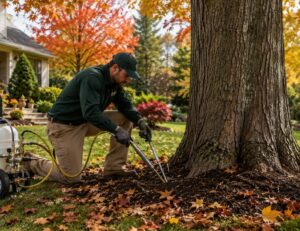
Our Root Fertilization program helps encourage healthier root development while improving soil conditions around stressed trees.
Why Choose Tree Green?
At Tree Green, we understand how construction affects mature trees because we’ve helped homeowners throughout northern Illinois protect valuable landscapes for years. Our experienced arborists provide professional evaluations, science-based treatment plans, and preventative recommendations that support long-term tree health before, during, and after construction.
Learn more About Tree Green, explore our complete Tree Services, schedule a professional Tree Diagnosis, learn about our Tree Stress Recovery and Root Fertilization services, browse our Gallery, read our Reviews, or visit our Service Areas to see if we work in your community.
TL;DR / Key Takeaways
- Construction can damage trees by disturbing roots and compacting soil.
- Many tree roots are located close to the surface, making them vulnerable during excavation and landscaping projects.
- Symptoms of root damage often appear months or years after construction is completed.
- Early planning and professional arborist guidance can help prevent long-term tree decline.
- Tree Green provides expert tree diagnosis, stress recovery, and root care services to help protect mature trees before and after construction.