
As we move deeper into summer, one of the biggest threats to your trees isn’t always obvious—heat and drought stress.
Unlike insects or disease, stress builds slowly. By the time most homeowners notice something is wrong, their trees have already been struggling for weeks or even months.
At Tree Green M.D., we see this every year: healthy-looking trees in spring suddenly decline in summer. Here’s how to spot the warning signs early—and what you can do to protect your trees before it’s too late.
Why Heat and Drought Stress Are So Dangerous
Trees rely on a delicate balance of water, nutrients, and environmental conditions. When temperatures rise and moisture drops, that balance is disrupted.
Prolonged heat and dry conditions can:
-
Limit a tree’s ability to absorb nutrients
-
Damage root systems
-
Increase vulnerability to insects and disease
-
Slow or stop growth entirely
What makes this especially dangerous is that stress often doesn’t show up immediately.
That’s why proactive care—like proper tree diagnosis—is essential to understanding what your trees are experiencing below the surface.
Early Signs of Heat and Drought Stress
The sooner you recognize stress, the better chance you have of correcting it.
Leaf Changes
-
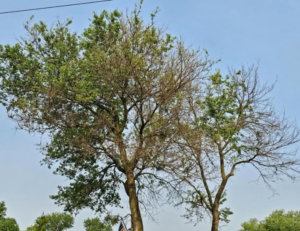
Yellowing or browning leaves
-
Leaves curling or wilting
-
Scorched edges or dry patches
Canopy Thinning
-
Sparse leaf coverage
-
Uneven growth across the tree
-
Early leaf drop in mid-summer
Slowed Growth
-
Smaller-than-normal leaves
-
Delayed or stunted development
These symptoms are often mistaken for disease—but in many cases, they’re tied directly to environmental stress.
Why Stressed Trees Attract More Pests
One of the biggest risks of drought stress is that it opens the door for insect infestations.
Weakened trees are prime targets for:
-
Borers that attack stressed wood
-
Scale insects that feed on sap
-
Aphids that multiply quickly in warm conditions
At Tree Green M.D., we often see a combination of stress and insect activity working together to accelerate decline.
That’s why we take a comprehensive approach using both stress recovery and insect control services.
What’s Happening Below the Surface
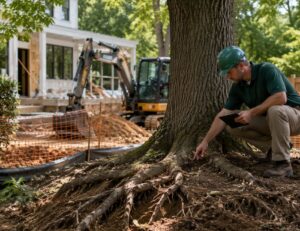
While the symptoms show up in the canopy, the real problem usually starts underground.
During drought conditions:
-
Soil becomes compacted and dry
-
Roots struggle to absorb water and nutrients
-
Fine root systems begin to die off
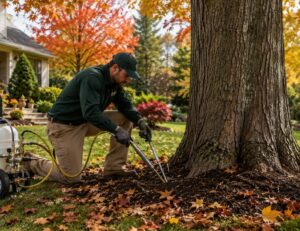
This is where treatments like root fertilization can make a major impact. By improving soil conditions and nutrient availability, we help trees recover from stress more effectively.
What You Can Do Right Now
If your trees are showing signs of stress, don’t wait—early action can prevent long-term damage.
Water Strategically
Deep, infrequent watering is more effective than frequent shallow watering. Focus on soaking the root zone rather than just wetting the surface.
Monitor for Pests
Keep an eye out for signs of insect activity. Stress and infestations often go hand-in-hand.
Avoid Additional Stress
Limit pruning and avoid damaging roots during extreme heat periods.
Get a Professional Evaluation
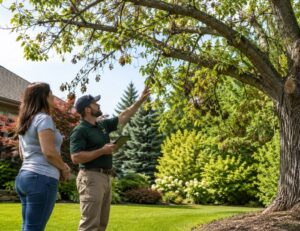
If you’re unsure what your tree needs, a proper diagnosis is the best place to start. Our tree stress recovery services are designed specifically for situations like this.
When Stress Becomes Long-Term Decline
If left untreated, heat and drought stress can lead to:
-
Permanent canopy loss
-
Increased susceptibility to disease
-
Structural weakness
-
Eventual tree death
What starts as a seasonal issue can quickly become a long-term problem.
At Tree Green M.D., we focus on stabilizing trees early so they don’t reach this stage.
Protect Your Trees Before It’s Too Late
Summer stress is predictable—but that doesn’t mean it’s unavoidable.
With the right timing and treatment plan, you can protect your trees and keep them healthy through the hottest months of the year.
At Tree Green M.D., we provide proactive care tailored to your trees, your soil, and your conditions.
To get started, explore our full range of tree care services or reach out through our contact page to schedule an evaluation.
TL;DR / Key Takeaways
-
Heat and drought stress build gradually and often go unnoticed early
-
Symptoms include leaf discoloration, thinning canopies, and slow growth
-
Stressed trees are more vulnerable to insects and disease
-
Root health is the key factor in recovery
-
Early intervention can prevent long-term damage or tree loss
-
Tree Green M.D. helps homeowners protect and restore tree health during high-stress seasons