Healthy trees rely on something most homeowners rarely think about: healthy soil structure. When soil becomes compacted, it can slowly suffocate a tree’s root system, leading to stress, decline, and eventually death.
In many Northern Illinois landscapes, soil compaction happens gradually—from construction, heavy foot traffic, lawn equipment, or even repeated rainfall on clay-heavy soil. The damage is often invisible until trees begin showing symptoms.
Understanding how soil compaction affects trees—and how arborists treat it—can help you protect the long-term health of your landscape.
What Soil Compaction Actually Does to Trees
Tree roots need three essential things to survive:
-
Oxygen
-
Water
-
Space to grow
When soil becomes compacted, the tiny air pockets between soil particles collapse. This reduces oxygen levels and makes it difficult for roots to absorb water and nutrients.
Over time, compacted soil can cause:
-
Slowed root growth
-
Poor nutrient uptake
-
Increased susceptibility to insects and disease
-
Gradual canopy thinning
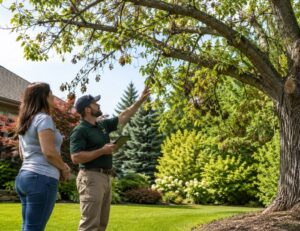
If you notice declining trees on your property, a professional tree diagnosis can determine whether soil conditions are contributing to the problem.
Common Causes of Soil Compaction in Residential Landscapes
Many homeowners unintentionally create soil compaction without realizing it.
Some of the most common causes include:
Construction and Landscaping Equipment
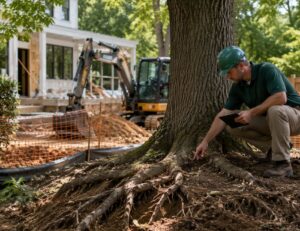
Heavy machinery compresses soil deeply, sometimes several feet below the surface. Even years after construction, tree roots may still struggle in compacted ground.
Repeated Foot Traffic
Areas where people walk frequently—such as around patios, play areas, or walkways—can slowly compress the soil over time.
Lawn Maintenance Equipment
Riding mowers, trucks, and landscaping equipment repeatedly traveling over the same areas can compact the soil around trees.
Natural Clay Soil
Much of Northern Illinois naturally contains clay-heavy soil, which compacts more easily than sandy soils.
When soil structure is compromised, trees often begin showing signs of stress that may require professional tree stress recovery treatments.
Signs Your Tree May Be Suffering From Soil Compaction
Because soil compaction occurs underground, symptoms often appear gradually in the tree canopy.
Watch for these warning signs:
-
Smaller than normal leaves
-
Early fall color
-
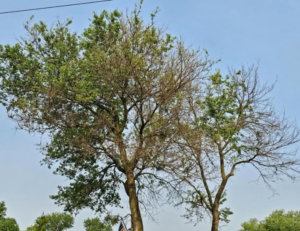
Sparse foliage or thinning canopy
-
Branch dieback
-
Increased insect or disease issues
Trees experiencing long-term stress may also become more vulnerable to pests such as borers or destructive insects like the emerald ash borer.
If these symptoms appear suddenly, it may be worth scheduling a professional evaluation through the tree services page.
How Arborists Fix Soil Compaction
The good news is that soil compaction can often be corrected with professional tree care techniques designed to restore healthy soil structure.
Air Spading (Soil Decompaction)
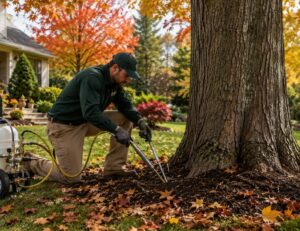
Arborists commonly use a tool called an air spade, which uses compressed air to loosen compacted soil without damaging tree roots.
This process:
-
Breaks up compacted soil
-
Restores oxygen flow to the roots
-
Allows water to penetrate deeper into the soil
Once the soil is loosened, arborists often add organic material or nutrients to improve long-term soil health.
Root Zone Fertilization
After decompacting the soil, arborists may apply deep root fertilization to help trees recover.
This treatment delivers nutrients directly to the root zone, improving tree vigor and encouraging healthier root growth. You can learn more about this treatment on the root fertilization service page.
Ongoing Tree Health Monitoring
Trees weakened by compacted soil may also become more susceptible to fungal diseases such as anthracnose fungus or other environmental stress issues.
Routine monitoring by a professional arborist ensures problems are caught early and treated appropriately.
Preventing Soil Compaction Around Your Trees
Preventing soil compaction is much easier than reversing it.
Homeowners can protect their trees by:
-
Avoiding heavy equipment near tree root zones
-
Limiting foot traffic around large trees
-
Installing mulch rings to protect soil structure
-
Scheduling periodic tree health evaluations
If you’re unsure about the condition of your trees, reviewing the company’s tree care service areas can help you determine if professional evaluation is available in your area.
When to Call an Arborist
If your trees appear stressed, declining, or are growing in areas that experienced construction or heavy traffic, soil compaction could be a hidden factor.
A professional arborist can evaluate your soil conditions and recommend treatments such as decompaction or root fertilization to restore tree health.
Homeowners in communities like Winfield, Naperville, and Wheaton often experience soil-related tree stress due to clay-heavy soils and suburban construction patterns.
Scheduling a consultation through the contact page can help determine the best treatment plan for your trees.
TL;DR / Key Takeaways
-
Soil compaction restricts oxygen, water, and nutrient flow to tree roots.
-
Construction, heavy equipment, foot traffic, and clay soil are common causes.
-
Symptoms include thinning canopies, smaller leaves, and gradual tree decline.
-
Arborists can correct compaction using air spading and deep root fertilization.
-
Early diagnosis helps prevent pests, disease, and long-term tree damage.
-
Professional evaluation can restore soil health and protect the long-term stability of your landscape.